The Volkswagen Bus and California
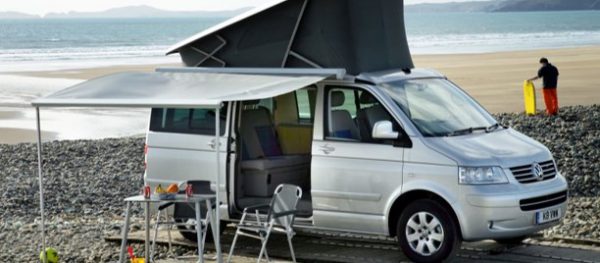
Volkswagen published big news for fans of microbuses and the film Little Miss Sunshine. The 1970’s VW Bus is getting a modernized makeover for its return to the roads. Set to be released in 2022, the Volkswagen Bus I.D. Buzz is an electric microbus that will be a popular choice for road trippers across the country. It’ll definitely be the number one pick if you’re living in a coming of age road trip movie.
However, if you’re going to be a proud owner of your very own Volkswagen I.D. Buzz, you better know how to show it off. Nothing will be more heartbreaking than buying a microbus just to watch it collect dust in your driveway. You gotta hit the road! But, not just any road - the Californian road!
Here are fun things to do when you’re driving your Volkswagen Bus in California:
[framed_box]
PCH Road Trip
The Pacific Coast Highway is a staple of any road trip in California. Driving along the coastline during sunset, playing your favorite music, and a montage of your friends laughing isn’t the opening scene to a luxury car commercial. It’s just what happens when you’re driving along one of the most beautiful highways in the country.
[/framed_box]
[framed_box]
Visit the Golden Gate Bridge
One great thing about driving the Volkswagen I.D. Buzz is its fuel economy. When you’re traveling to far away destinations, like the Golden Gate Bridge, you won’t drop an erroneous amount of money on gas. You can say, an electric microbus is the golden gate to the future of innovative automotive experiences.
[/framed_box]
[framed_box]
Surfing at the Beach
With all the rooftop space that comes with the Buzz, you can pack up all your gnarly surfboards and visit the beach. Malibu, Huntington, Santa Cruz, and Santa Barbara have some of the best beaches in California. Be sure to “hang ten” and add these hot spot destinations to your beach journey across the Golden State. That’s how you use “hang ten,” right?
[/framed_box]
[framed_box]
Cruise Control
The least popular and not recommended thing to do with your Buzz is to receive a traffic ticket. To avoid getting a speeding ticket you can use the wagon's cruise control feature. You can also make sure you are going the speed limit when you see a police officer in any of the mirrors. Either option will help you not get a ticket. You do not want to get a traffic ticket during your drive and come back home to see a spike in your annual insurance rate. If you do a get a ticket, do not stress, you can take
traffic school online to dismiss the ticket and avoid getting points on your record.
[/framed_box]
[framed_box]
Camping at Big Sur
The minibus can seat up to 8-people or it can collapse the seats to give you space for luggage. Such as camping gear for your next trip to Big Sur. Being one of the popular locations in California to camp, Big Sur is a great way to celebrate the spacious benefits and fuel economy of your I.D. Buzz. When you roll up to the camp grounds in your fancy future bus, people will call it a Big Sur-prise.
The hype behind Volkswagen’s latest vehicle concept is growing. Within the next four to five years, you’ll be a witnessing a modern resurgence of these classic relics. So, get in on the hype and be on the lookout of purchasing your own I.D. Buzz.
[/framed_box]
Remember, if you receive a traffic ticket when you’re driving the latest and greatest microbus, you don’t have to break the bank paying it off - especially since you just bought the new car. If you enroll in online traffic school, you can prevent your annual insurance rate from increasing.
The Truth Behind the California Highway Patrol
I'm sorry, but it seems like there is no specific text provided for rephrasing. Please provide the text you need help with, and I'll be glad to assist you.
When sharks spot their prey, they circle the unsuspecting target, waiting for the perfect time to strike. They can taste the blood from their victim and know when it’s ripe for the taking. Sharks are the most dangerous predators of the ocean. People consider California Highway Patrol to be the sharks of the highway.
But, that’s not true.
In fact, they’re predatorial strategy is just one of the many myths behind Highway Patrol. They’re not sharks. Highway officers are making the roads a safe place to drive for everyone. They don’t have a vendetta against anyone or anything, unless it’s reckless, unsafe driving.
You just passed the best
online traffic school California has to offer. So, let’s pull back the curtain on the officers who are patrolling the highways around your home state. Here’s the truth behind the California Highway Patrol.
[framed_box]
What Exactly Do They Do?
Whether you’re driving down the PCH or taking I-10 through the desert, you’ll pass by Highway Patrol at some point. They have various responsibilities, but the overall purpose of their existence is to help make the roads safe.
If we’re going back to our perfect ocean metaphor, Highway Patrol officers are more like the dolphins of the highways.
Dolphins are the helpful, nice mammals of the ocean, right? Right.
When there’s a roadside emergency, traffic incident, or other high-stress situations, Highway Patrol officers come to support and aide where necessary. They’re here to help. That’s why it’s usually wise to call for Highway Patrol when you’re experiencing roadside trauma.
They also play a large hand in removing drivers, who may be under the influence of a substance, off the roads. They enforce the laws of the road. Reckless drivers, whether they’re drinking and driving, speeding, or driving sporadically and recklessly, Highway Patrol is there to investigate the situation. They want to keep highways safe.
[/framed_box]
[framed_box]
Their Training and Expertise
Still not convinced that Highway Patrol doesn’t have your best interest at hand? We bet you’re thinking “what kind of training do these schmucks have?”
Well, along with their primary education, all California Highway Patrol officers must go through post-secondary schooling.
This includes courses and degrees in criminal justice, police justice, and law enforcement. To add, officers are required to undergo rigorous physical training and testing, as well as personality tests.
When it comes to enforcing the laws, California is looking for the best of the best.
Even after being accepted into the department, Highway Patrol recruits must attend month long training programs and gain experience working in state police departments.
[/framed_box]
[framed_box]
Community Engagement
They’re not just patrolling the highways, they’re educating the community.
Highway Patrol officers take on the responsibility of making appearances around your community to help educate children, driving students, and others. They’re goal is to reduce the number of reckless drivers on the road. A big part of this is by engaging the community.
Whether it’s getting to know the drivers themselves or giving talks on the dangers of driving recklessly in high schools, Highway Patrol officers want to protect the communities they serve.
Uh-oh. Your car is parked on the right side of the highway. You’re holding a ticket that reads “driving violation” that was just handed to you by a California Highway Patrol officer. You’re coming down from a head rush after seeing those lights flash up in your rearview mirror, and your stomach can’t sink any lower.
[/framed_box]
Now what?
Well, you’re in luck. Traffic school is a great way to reduce the money you have to pay for high ticket costs. You can enroll in a online traffic school for your california speeding ticket and get a price reduction by proving you’re a safe driver.
Myimprov.com offers traffic school classes to show everyone that you too can be a defensive driver.
How to Get a Traffic Ticket Reduced

To put it bluntly, traffic tickets are hell. You wind up paying exorbitant fines because some municipalities are increasing the amounts to raise revenue. Moreover, the police are more vigilant than ever about catching motorists in the wrong. If all of this is not bad enough, never forget about the cameras that photograph your car speeding and send the pictures to you in the mail, along with a large bill.
So what can the average driver, such as yourself, do to survive in this age when “Big Brother” is watching their every move on the roads? Well, the answer is to enroll now for a
defensive driving course. Not only will you receive pertinent information on how to remain safe behind the wheel but also a possible reduction of license points and having your ticket reduced or dismissed.
The Driving School of Today

You might at first be a bit wary of the advice to attend driving school. After all, you are probably a busy person. When do you have time to sit in a classroom?
Well, scheduling classes is no longer an issue. The driving school of today can take place either in a traditional brick and mortar building or online. You can have online class wherever and whenever convenient. In fact, many families and coworkers enroll in group classes to motivate each other to complete the courses.
Ticket Reduction

Most states allow those who completed a defensive driving course to have their traffic tickets dismissed.
The school should be recognized by the state. Moreover, the instructor must be certified by the authorities and the course most be for a certain number of hours. Check with your driving school to ascertain the specific requirements in your jurisdiction.
Upon completion of the course, motorists may receive ticket dismissal, license point reduction and automobile insurance discounts.
Defensive Driving vs. Traffic School

Be careful when enrolling. Some states define the two kinds of schools differently. In New York and Florida, you will be taking a
defensive driving course to have your traffic ticket points reduced.
Arizona dismisses certain traffic violations after a motorist completes an approved defensive driving course. In contrast, traffic school is for serious violators ordered to take classes by the courts.
Meanwhile, California uses the two names interchangeably.
Going to Court

Americans have the right to defend themselves in a court of law. Some choose to do so when presented with a traffic ticket. They want to fight it out with the city to get the infraction removed from the record.
In certain cases, these challengers are successful. A California physicist was able to use scientific principles to win. He demonstrated that a police officer, situated at a certain angle, perceived his car to have run a stop sign when in fact it had stopped. In other instances, an alleged violator can win by default when the officer who presented the ticket does not show up in court.
Nevertheless, these victories are few and far between. Motorists usually wind up having to pay the fine and possibly some court costs.
Defensive driving school is the easier route without a doubt. Just enroll, finish the course and the violation disappears.
Enroll and Get on With Life
Everyone wants to save money. One way you can do so today is by enrolling in a state approved defensive driving school. You can have your ticket dismissed, removing the fine. Better yet, your driving record will be wiped clean, leading to a reduction in your insurance premium rate.
Perhaps best of all, you will learn some driving skills that can help you avoid getting tickets in the future.
NY Cracks Down on Distracted Drivers
Governor Cuomo Approves Law to Crack Down on Drivers Using Handheld Gadgets
New Legislation Makes Using Handheld Electronic Devices while Driving a Primary Traffic Offense; Additional Regulation will Increase Penalty from 2 Points to 3 Points for Cell Phone and Electronic Device Usage While Driving
Albany, NY (July 12, 2011) Governor Andrew M. Cuomo today signed a new law that strengthens the enforcement against drivers who use handheld electronic devices for activities such as texting while a vehicle is in motion. The legislation makes this action a primary traffic offense, giving law enforcement the power to stop drivers solely for engaging in this activity. The Governor also announced today that he will increase the penalty for using a cellular phone without a hands-free device or a handheld device while driving from two to three points through changes in state regulations. "I am proud to sign this bill today, both as the Governor and as a father of three teenagers," Governor Cuomo said. It's plain and simple: distracted driving leads to tragedies that have affected families all across
New York.
This new law will help ensure that drivers keep their eyes on the road and their hands on the wheel. I thank Senator Marcellino and Assemblyman Weisenberg for their hard work on this legislation." Before this law, it was illegal for drivers to use handheld electronic devices while their vehicle was in motion, but it was a secondary traffic offense -- meaning a driver had to be stopped for another violation in order to receive a ticket. The new law makes it a primary traffic offense and it will go into effect immediately. The monetary penalty for a violation of this law continues to be a fine of up to $150. Illegal activity includes holding an electronic device and:
- Composing, sending, reading, accessing, browsing, transmitting, saving, or retrieving electronic data such as e-mail, text messages, or webpages
- Viewing, taking, or transmitting images
- Playing games
The law does not penalize drivers using a handheld electronic device that is affixed to a surface or using a GPS device that is attached to the vehicle. The law also exempts police officers, fire fighters, or emergency vehicle drivers while they are performing their duties. In addition, a driver is exempt from the law if the driver is communicating or attempting to communicate with law enforcement, the fire department, or medical personnel during an emergency situation.
New York State Senator Carl L. Marcellino said, "With this new legislation, New York State driving laws have finally caught up with today's technology. Our new law will strengthen enforcement against drivers using handheld electronic devices and help keep drivers, passengers, and pedestrians safe. I am proud to stand with Governor Cuomo as he signs the bill I sponsored into law and we finally make distracted driving a serious offense." New York State Assemblyman Harvey Weisenberg said, "As a former police officer, I've seen the devastation caused by distracted drivers. Today, we are giving law enforcement the tools they need to keep our roads safe and prevent future accidents. These changes will save lives. I'd like to thank Governor Cuomo for supporting this law and I look forward to our continued work together."
New York State Police Superintendent Joseph A. D'Amico said, "Motorists should now realize the dangers of operating a motor vehicle while texting on mobile devices or talking on a cell phone without an approved hands-free device. This change in the statute will allow law enforcement to continue the battle against distracted driving. Distracted driving is dangerous driving and drivers must reduce diversion and behaviors that take their attention from the road. Attentive, responsible, defensive driving is the key to avoiding crashes and keeping our highways safe." New York City Police Commissioner Raymond W. Kelly said, "It's no secret that violations of the no-texting and no use of hand held devices while driving rules are widespread despite their nexus to accidents, including fatalities. This legislation is a welcome step toward saving lives."
President of AAA New York State Thomas Hoy said, "With nearly 2 trillion text messages sent last year, texting represents the most dangerous form of distracted driving. We applaud the Governor and lawmakers for stiffening the consequences for those who jeopardize the rest of us with their careless conduct." The National Highway Traffic Safety Administration reports that 16% of fatal accidents in 2009 were due to distracted driving and 20% of people injured during a crash were involved in a crash where distracted driving was reported. A study by the Virginia Tech Transportation Institute found that truck drivers who were texting were 23 times more at risk of a crash or near crash.
3 Ways to Prevent Your Car Insurance Rates
Seeking ways to **save money** drives many folks these days. However, with one or more **traffic violations**, you might find your **car insurance rates** gobbling up all your savings.
If you’re feeling trapped in a traffic ticket pile up, here are three ways to dig yourself out of the unwelcome weight of higher insurance rates:
1. Shop around for a better rate. The first thing you should do is to compare quotes from various car insurance companies to see if you can find a lower rate.
According to an Insurance.com analysis of more than 32,000 insurance policies sold in 2010, drivers who bought a one-car, single-driver policy last year and had one violation in their driving history paid an average of 18 percent more for car insurance than drivers with no violations.
The numbers get worse as your offenses pile up. Drivers with two violations paid 34 percent more for insurance, and drivers with three violations tacked on a whopping 53 percent to their insurance costs when compared to drivers who were violation-free.
If you decide to shop around for a better deal, investigate new companies carefully to avoid any policy pitfalls.
2. Take a driver safety course. Some states reduce or expunge points from your driving record if you take a
defensive driving class. Depending on where you live, your auto insurance company may be required to lower your car insurance premium after you complete the course.
For instance,
New York offers a Point and Insurance Reduction Program (PIRP). If you are the principal operator of a motor vehicle registered in the state of New York, and you complete an approved PIRP course, you will receive a minimum 10% reduction in the base rate of your automobile and motorcycle liability and collision insurance premiums each year for three years.
To learn more about the driver safety courses and point and insurance reduction in New York, please visit:
https://transact.dmv.ny.gov/pirp/#ipirp.
In many states, insurance companies have point systems that are different from their DMV driver violation point system. Contact your insurance company about their point system and find out how completing a driver safety course may reduce your rate.
3. Raise your deductible. Drivers who raise their collision and comprehensive deductibles from $250 to $500 or $1,000 will see their annual premium fall. However, before taking this route, make sure you have enough money in savings to cover the deductible should you have to make a claim.
Which violation hurts your rate the most?
Car insurance rates soar for drivers who have one moving violation and jump by more than 50 percent after three.
Some of the
violations that hurt your car insurance rates the most include:
- Speeding tickets
- Driving under the influence of drugs or alcohol
- Careless or reckless driving
- Running red lights
- Failure to yield or stop at a sign
- Fleeing from police
- Driving the wrong way down a divided highway
- Improper passing
- Unsafe U-turn
- Failure to use a child restraint
Obviously, a DUI is going to be one of the worst for rate increases. But each insurer calculates rates differently, so a specific type of violation may be priced higher by one insurer than by another.
Drivers with three or more violations worry about becoming uninsurable, but those fears may be unfounded. It’s just a matter of finding the right rate for that risk.
If an insurer raises your auto insurance rate after a violation, there are still ways to cut those costs. Following these three steps will help you stave off higher insurance rates – before they bury you.
The original article can be found at Insurance.com:
“Car insurance rates soar as tickets pile up”
Texting-and-driving bill dies
Senate hits a snag on ban for sending messages from the road. **Arizonans won't have restrictions on texting while driving** — for now, anyway.
Proposed legislation that would have prohibited typing, reading or sending text messages and e-mails while driving on a state highway died with an 11-11 vote by the Senate on Tuesday. The bill would not have prohibited talking on the phone while driving and would have allowed drivers to type a name or telephone number to make a call.
This is the second year in a row the effort to ban texting while driving has failed despite support from dozens of organizations, including cellphone-company representatives. The Arizona Citizens Defense League opposed the measure.
Legislators who voted against it acknowledged that texting while driving is dangerous, but said they opposed unnecessary government restrictions.
Sen. Ron Gould, R-Lake Havasu City, called the legislation a "nanny bill" and "feel-good legislation" that would have banned a practice already covered under current laws against reckless driving.
Supporters said the bill is about saving lives. They said parents would be able to tell children that texting while driving is illegal.
"It's such a dangerous activity to be texting while you're driving, that outlawing it would seem to be a given," said Sen. Barbara Leff, R-Paradise Valley.
Phoenix banned texting while driving within its city limits in 2007. Phoenix police Officer Luis Samudio said that about nine citations for texting while driving have been issued since the law went into effect.
"It is minimal," he said.
Read more here
If you have recently taken some type of
traffic school you know its very dangerous to text or talk while driving. Its been proven over and over. So please practice safe driving.
Fighting Traffic Tickets – Is it a Good Idea?
**Figure Out If It's Worth It**
First, decide if battling a ticket is worth it. If a ticket means thousands of dollars in higher insurance, risk of losing your license, or other serious troubles, it might be worth the effort. But, fighting tickets isn’t always easy or worth it. Here are some simple tips for deciding:
**Understand the Law You’re Accused of Breaking**
Many police officers don’t know the law in detail— that’s for lawyers. Begin by reading the exact law you’ve allegedly broken and break it into parts. Once it's broken down, if you can show your actions didn’t fully fit the law’s exact words, you’re closer to proving your innocence. For example, here’s a stop sign law with its elements separated: “[A person] [operating a human-powered vehicle] [approaching a stop sign shall slow down] and, [if required for safety, stop before entering the intersection].” Notice, stopping is only needed if it’s for safety, and the law permits you to “cautiously make a turn or proceed through the intersection without stopping.” If a cop wrote “rolled through intersection without a complete stop,” you can argue in court that you didn’t break the law. Judges can accept this reasoning since it’s a common lawyer tactic. Remember, you’re innocent until proven guilty.
**Don’t Pay the Ticket Right Away**
When you get a ticket, don’t pay it immediately. In most places, paying means admitting guilt. Instead, find out how to get a court date.
**Think About Traffic School**
Some places let you attend traffic school to get charges dropped or points erased from your record. Research your state laws to explore this option. If online traffic school works for you, ask for it in court. Most places accepting traffic school let you do it online. Traffic school usually takes 4-12 hours, which is better than other penalties.
**Common Defenses for a Traffic Ticket**
Several typical defenses help fight tickets. These often rely on your right to question the accuser.
**The Officer Doesn’t Show Up**
The easiest win happens if the officer doesn’t show. You have the right to question them, so if they’re absent, you usually win automatically. Want to up your odds of a no-show?
- Postponing the court date can significantly increase the odds that the officer will not be present during the trial.
- Never go with the date on your ticket. That's usually a "gang date" for the officer, where the officer has scheduled all of his or her court dates at once. If you schedule for an extension that falls on a different day, chances are they aren't going to come in on their day off just for you.
- Try to choose a court date that is closer to the holidays or summer vacation days - this might increase the odds of your officer being out on vacation.
Camera Tickets and Hearsay People often think that there's little they can do with a camera based ticket, but they're amazingly easy to beat. Here are some tips:
- Courthouses will rarely go through the trouble of bringing the video or picture to court, usually resulting in an automatic dismissal of the ticket.
- Even if they do, there is no human subject to question other than the officer who viewed the tape. The second the officer opens his mouth, you just object "hearsay". Hearsay is the equivalent of "so and so told me", which courts consider unreliable evidence. After all, the officer didn't actually see you do anything, rather the officer is relying on the observations of someone/something else. As a result, the officer can't testify as to what you did wrong and obviously neither can the camera. It takes courage to do this, but it can work.
Trial by Declaration In many states, you are entitled to a trial by mail. You submit your claim as to why you are innocent in a letter, and the officer must do the same. While officers will often show up for court because it is an overtime opportunity, trial by mail is pure paperwork, and they will often not bother to submit their side of the story. When this happens, you win by default. Should you lose by mail, you have lost nothing: you can still request an in-person trial, request traffic school, or pay your fine.
The Sixth Amendment Requires a Speedy and Public Trial The sixth amendment guarantees you a speedy and public trial, and this can be an easy basis to avoid a ticket. For example, in California, a speedy trial is defined as 45 days from the time of the infraction. In many jurisdictions you must go to the courthouse in person to get a court date. Among those legal documents you are asked to sign, will be one in which you waive your right to a speedy trial.
Do not sign this document. You cannot be legally forced to waive this right. What this means is that if the court system cannot fit you in, within those 45 days, (times for your state may vary) then your case must be dismissed.
Tickets Based on Radar Guns Most radar guns need to be recalibrated every 30-60 days, and due to ignorance, lack of funding, or laziness, they rarely are. One solid argument for your case is to prove that the measurement device is faulty. In some states the officer must check the calibration after issuing the ticket - usually by using two tuning forks held in front of the radar, which vibrate at the frequencies for 35 mph and 55 mph. Verify whether this was done and documented.
Check Your Ticket for Errors While courts will often excuse minor errors on a ticket ? a misspelled name or whether your car color is maroon or dark red ? if the officer cites the wrong law on the ticket, or grossly misidentifies the highway or your make of car, you may to get your ticket dismissed.
Defenses That Don't Work The following is a short list of common defenses people often make when fighting traffic tickets that just don't work:
- You claim ignorance of the law. It doesn't matter how honestly you misunderstood what was required, it won't work.
- You argue that no one was hurt. The no-harm-no-foul rule doesn't apply in court. The only exception is whether safety is part of the law itself, and you can argue that obviously you operated your vehicle safely because no one was hurt.
- You complain that the officer selected you alone out of a dozen other potential violators. Admitting that you were in fact guilty, but that there were other guilty people present doesn't help you. You can win a "selective enforcement" defense, but it's very hard to do and requires that you demonstrate the officer had a specific and improper motive to pick on you. For instance if you filed a report against the officer and he just happened to pull you over the next day with a dozen other violators nearby, you may win.
- You give the judge a sad story. It doesn't work, judges hear this all day long and may doubt your honesty. At best this will slightly reduce your fine.
- You claim the officer is lying. Between you and the police officer, the judge is more likely to believe the officer. Unless you have specific proof, it won't work.
How To Avoid A Speed Trap
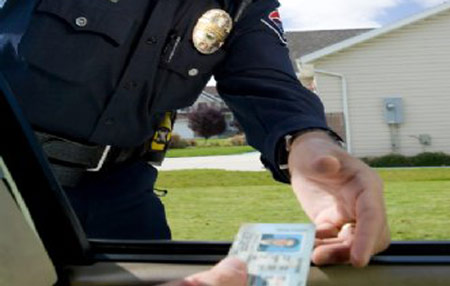
It may seem like every day is a battle while driving on the road. You race across town to get to places on time .. avoiding cars that are driving too slow or too fast. In most cases you may fall into the latter category since you're always trying to make it to your destination on time. And then BAM a speed trap...
Most of you may have experienced being in a speed trap and it sucks getting that hefty
traffic ticket which usually derives you NO mercy especially if you're going fast on residential roads.
Although we are in no way encouraging you to beat the system and go fast through town here are some tips on how to minimize getting caught in "THE SPEED TRAP."
Note: We do not condone speeding.
1. Don't speed. But if you are then look out for typical speed trap spots like heading down hills, rounding curves.
2. Utilize services online that will help you on the road. Folks are getting hip to speed traps around their town and are using the world wide web to help their fellow drivers:
The Speed Trap Exchange website [http://speedtrap.org/] helps you find speed traps along your route; before embarking on a trip do a little research and take the list with you.
Another tool to avoid speed traps and apparently favorite amongst soccer moms can be found at Trapster.com. This application can be downloaded to your cell phone and will send you real-time alerts about locations of a speed trap. What's even better is that it is hands free so it also avoids you getting a ticket for holding your cell phone to check. Visit Trapster.com for all the info.
3. Buy a Radar detector. Note to Truck Drivers: By federal law, radar detectors are illegal in commercial vehicles (such as trucks) in all states. Radar "jammers" are also illegal in all states.
4. Seems that the best tool on the road is to have knowledge of the road you're traveling so educate yourself on the maximum speed limits in all the states you'll be visiting as speed laws vary from state to state. Visit: http://www.nhtsa.gov/people/injury/enforce/speedlaws501/introduction.htm
So enjoy the road with these little tips on avoiding speed traps but most of all drive safely ... not too fast. Also, if you happen to need it
online traffic school or
defensive driving course could be the best way to fix your driving record.


 Live Chat